

The women who have won the Nobel Peace Prize come from different backgrounds and represent a variety of forms of peace making.
What did all these women have in common? They were all women of high ideals, prepared to work and sacrifice for human welfare and laboured in the certainty that their objectives would eventually be realised.
They struggled against all odds, withstood disappointments and defeats, resolved never to give up. They shared a faith in humanity, whether born of religious conviction or humanism. Most displayed remarkable courage.
Alfred Nobel had long been interested in peace but it was his friend, peace activist Baroness Bertha von Suttner, who drew his attention to the international movement against war, which was becoming organised in the 1890s, and secured his financial support for her peace activities.
Four awards were made, however, before she finally received the prize in 1905.
It was, however, 26 years later, before the second woman, Jane Addams, was honoured with the Prize. Addams had first been nominated in 1916 for her efforts to bring the First World War to an end and repeatedly thereafter, but it was only in 1931 that she shared the divided Prize with Nicholas Murray Butler.
Fifteen years later in 1946, Emily Green Balch shared the Prize with John Mott of the YMCA.
It took 30 years for the next women laureates, Betty Williams and Mairead Corrigan, even though the committee had had its first woman member since 1948. In the first 45 years of the Prizes, only three went to women.
Mother Teresa received her’s in 1979. She was born into a Roman Catholic Albanian family living in Yugoslav republic.
At the age of 12, she had felt the call to help the poor, and a few years later decided to work in India.
At 18, she joined the Irish order of Loretto and went to teach in their girls' school in Kolkata. After 16 years, she felt a new call to work in the Kolkata slums. There she started a new order, the Missionaries of Charity, committed to serve the poorest of the poor, which soon spread to many other countries.
Most Popular
-
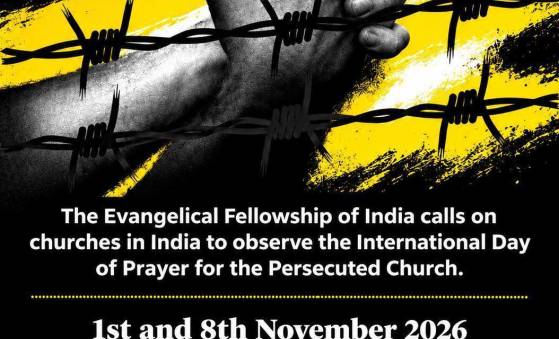
Evangelical Fellowship of India Calls Churches to Pray for Persecuted Christians on 1 and 8 November
-
A Hilltop Church in Kumaon Turns 94
-

Catholic priest and school principal seriously injured in attack by masked men in Jharkhand
-
Fresh Violence in Manipur Leaves Four Dead as Security Is Tightened
-

Myanmar Military Accused of Destroying Two Churches in Christian Regions