

Seth Godin has written a marvelous book on 'tribes'. This is a post-modern book. The author provides lot of insights about leadership for the Post-Modern generation. To be a relevant leader among the emerging generation is a challenging task. Certainly, this book provides insight and needed skills to be a leader of a tribe.
The author describes tribe as: "A tribe is a group of people connected to one another, connected to a leader, and connected to an idea." People want to be part of a tribe because it is the most powerful survival mechanism, to contribute to (and take from)a group of like-minded people. The tribe is not limited to a small geographical area because the Internet eliminates geography. " This means that existing tribes are bigger, but more important, it means that there are now more tribes, smaller tribes, influential tribes, horizontal and vertical tribes, and tribes that could never have existed before."
Leaders who think differently, act differently, work differently are true leaders. The author calls them as Heretics. "Heretics are the new leaders. The ones who challenge the status quo, who get out in front of their tribes, who create movements." It is interesting note that there is reward to be a heretic. "The marketplace now rewards (and embraces) the hetetics. It's clearly more fun to make the rules than to follow them, and for the first time, it's also profitable, powerful, and productive to do just that."
The leadership role is not difficult according to the author. But the society generally teaches an individual to avoid the leadership role. "Leadership isn't difficult, but you've been trained for years to avoid it." So, many are not courageous enough to take the role of leadership.
Movements happens because of leaders. "Movements have leaders and movements make things happen." They change things or create new things. "Leaders have followers. Managers have employees. Managers make widgets. Leaders make change."
The author writes about marketing: "Marketing is the act of telling stories about the things we make – stories that sell and stories that spread. Marketing elects presidents, and marketing raises money for charity. Marketing also determines if the CEO stays or goes."
"Here's what's changed: some people admire the new and the stylish far more than they respect the proven state of affairs. And more often than not, these fad-focused early adopters are the people who buy and the people who talk. As a result, new ways of doing things, new jobs, new opportunities, and new faces become ever more important."
"Leaders lead when they take positions, when they connect with their tribes, and when they help the tribe connect to itself." The new rule of leadership is you should have the desire to grow. Also scout for customer or followers who believe in you and donate to you or support you. In the new world, "Skill and attitude are essential. Authority is not."
The new kind of leaders lead people with ideas, as opposed to using threats and bureaucracy to manage and control them. Two things to turn a group of people into a tribe: A shared interest and A way to communicate. The communication can be one of four kinds: Leader to tribe, Tribe to leader, Tribe member to tribe member and Tribe member to outsider. So a leader can help increase the effectiveness of the tribe and its members by:
· Transforming the shared interest into a passionate goal and desire for change.
· Providing tools to allow members to tighten their communications; and
· Leveraging the tribe to allow it to grow and gain new members.
There are two different entities: Crowds and Tribes. A crowd is a tribe without a leader. A crowd is a tribe without communication. Most organizations spend their time marketing to the crowd. Smart organizations assemble the tribe. Organizations that destroy the status quo win. "The fastest growing churches are the newest ones." "The organizations of the future are filled with smart, fast, flexible people on a mission."
In unstable times, growth comes from leaders who create change and engage their organizations, instead of from managers who push their employees to do more for less.
"In a battle between two ideas, the best one doesn't necessarily win. No, the idea that wins is the one with the fearless heretic behind it." Fear's an emotion, no doubt about it. One of the strongest, oldest, and most hardwired. What people are afraid of isn't failure. It's blame. Criticism. Fear of criticism is a powerful deterrent because the criticism doesn't actually have to occur for the fear to set in.
Leadership is scarce because few people are willing to go through the discomfort required to lead. An organization, any organization, needs people who aren't just willing to follow, but are eager to follow. Curious people count. Not because there are a lot of them, but because they're the ones who talk to people who are in a stupor. So great leaders don't try to please everyone. Great leaders don't water down their message in order to make the tribe a bit bigger. Instead, they realize that a motivated, connected tribe in the midst of a movement is far more powerful than a larger group could ever be.
In the postmodern world you need to know is two things:
1. Individuals have more power than ever before in history.
2. Only thing holding back people is lack of faith.
"Welcome to the age of leverage. Bottom-up is a really bad way to think about it because there is no bottom." "The art of leadership is understanding what you can't compromise on."
"Leadership almost always involves thinking and acting like the underdogs." "The easiest thing is to react. The second easiest thing is to respond. But the hardest thing is to initiate." But people do not want to initiate but do sheepwalking. "I define sheepwalking as the outcome of hiring people who have been raised to be obedient and giving them brain-dead jobs and enough fear to keep them in line."
"And many organizations go out of their way to hire people who color inside the lines, who demonstrate constituency and compliance." "The secret of leadership is simple: Do what you believe in. Paint a picture of the future. Go there. People will follow." "Initiative is such an astonishingly successful tool: because it's rare. Even a little bit of action, a few new ideas, or a tiny bit of initiative can fill the vacuum."
Sense of timing is very vital in leadership. "There's a small price for being too early, but a huge penalty for being too late. The longer you wait to launch an innovation, the less your effort is worth."
The elements of leadership: Leaders challenge the status quo. Leaders create a culture around their goal and involve others in that culture. Leaders have an extraordinary amount of curiosity about the world they're trying to change. Leaders use charisma (in a variety of forms) to attract and motivate followers. Leaders communicate their vision and make decisions based on that commitment.Leaders connect their followers to one another.
"Albert Einstein said, 'Imagination is more important than knowledge.'""Every tribe leader I've ever met shares one thing: the decision to lead."
This book is an asset for young leaders and old leaders to understand the younger people, the kind of leadership they have to exercise and aspire for. Followers among youngsters are searching for new kind of leaders.
Most Popular
-
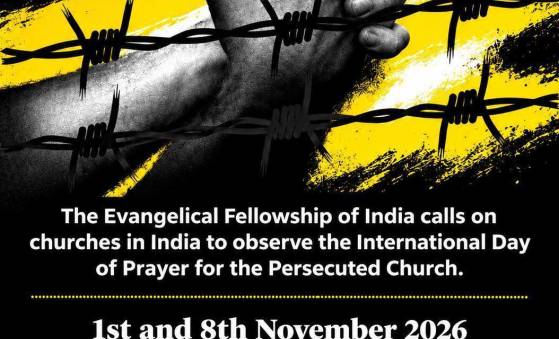
Evangelical Fellowship of India Calls Churches to Pray for Persecuted Christians on 1 and 8 November
-

A Hilltop Church in Kumaon Turns 94
-

Catholic priest and school principal seriously injured in attack by masked men in Jharkhand
-

Fresh Violence in Manipur Leaves Four Dead as Security Is Tightened
-

Myanmar Military Accused of Destroying Two Churches in Christian Regions