

New Delhi – The Catholic Bishops Conference of India (CBCI) has officially launched the Health and HIV/AIDS Policy on August 31 at India Habitat Centre, New Delhi, calling for an upgradation of healthcare facilities in the nation, Christian Today has confirmed.
The Policy that was prepared by the CBCI Commission for Health Care headed by the Archbishop Bernard Moras of Bangalore and a team of experts in the field, was approved by the CBCI Standing Committee during it’s meeting in April 2005. It is the outcome of extensive consultation at the national level as well as among representatives involved in health care in all the 12 ecclesiastical regions held under the patronage of the bishops in–charge of health care in the regions. Various health and development organizations such as USAID and Futures Group collaborated to give the Policy its final form.
Speaking on the importance of good health, Cardinal Toppo, president, CBCI, said, “Health is wealth. All of us know the value of health. It is precious for us. Any little sickness, any little pain, is enough to change the whole rhythm of our life. It affects our work. It reduces our efficiency. It disturbs our rest and even sleep. It burdens the other members of our families or communities. It even upsets their life–schedule.”
“A healthy mind in a healthy body. For a nation that aims at true development and real progress, the priority should be the health of the people. Even when a nation becomes a nuclear power, or secures high industrial growth and enviable economic expansion, if the health of the people is neglected, none of these achievements could be counted worth the while,” he said, while emphasising the need of providing universal health care.
Cardinal Toppo, who is also the archbishop of Ranchi, appreciated the progress made by the Union Government in healthcare sector that has led to the eradication of some of the dreaded diseases in the nation.
However, the cardinal lamented that though “there has been a gradual and steady growth in the personnel, health care facilities, and the availability of some of the best treatment and care” in India, yet, it will take some time to reach the World Health Organization’s minimum standard of halthcare. “Some say that India today is standing where Japan and Italy stood 30 years ago. [Though according to estimates] it will cost India a hundred thousand crores by 2010 to reach the WHO’s minimum standard of health care, yet, going by the current rate, the Government and private sector combined will be spending only about rupees forty thousand crores,” he said.
According to the cardinal, though super–speciality healthcare facilities are now available in India, yet, the common people are deprived of it. “The globalization has brought in super speciality hospitals into our country. These modern healthcare facilities available in our country will help ‘medical tourism’, which could be promoted. But, at the same time, one question remains unanswered: what about the healthcare needs of the millions of the common, ordinary, poor women and men? Does the new advancement in health care cater to their needs?” he queried.
“The Policy calls for a renewed commitment with a wider reach–out, especially to the under–served areas,” said Archbishop Moras, speaking on the need for a revised health care policy.
The Union Health & Family Welfare Minister, Dr. Anbumani Ramadoss, released the Revised Health Care Policy, while the Minister for Statistics and Programme Implementation, Mr. Oscar Fernandes, launched the new Policy on HIV/AIDS.
In addition to the Policies, two books entitled ‘The Nurse’ by R.H. Lesser and ‘Streams of Compassion’ were released.
Commenting on the Policy, the programme coordinator of the Futures Group, Dr. Sherry Joseph said, “The principles followed in the policy development process included policy dialogue, broadened participation of stakeholders and policy relevant research. One of the activities undertaken was to research and document the interventions by the Church–based organizations working on different aspects of HIV/AIDS.”
Emphasising on the importance of the Policy, the Commission’s executive secretary Fr. Alex Vadakunthala stated, “Church as a community has the power to influence people in the grass root level to remove stigma against people living with HIV/AIDS.”
“Church centres need to be strengthened by introducing various methods such as anti–retro viral therapy so that people who are effected get proper treatment against the disease,” he said, adding, “The official launching is in view of planning a clear strategy of implementation of the policy and foster greater response to the multiple challenges in the field of health and build a wider commitment to principles and practices.”
The HIV/AIDS Policy that invites the entire Christian community in India towards a concerted and intensive response to the HIV/AIDS pandemic, offers a comprehensive understanding on prevention, care and support of the people living with HIV and those affected.
“We do not approve of any sort of discrimination or hostility directed against people living with HIV/AIDS. This is unjust and immoral,” it states.
There are over 4000 healthcare facilites in India that are being run by the Catholic Church. Of these, 58 centres are care and support homes for the people living with HIV/AIDS.
Most Popular
-
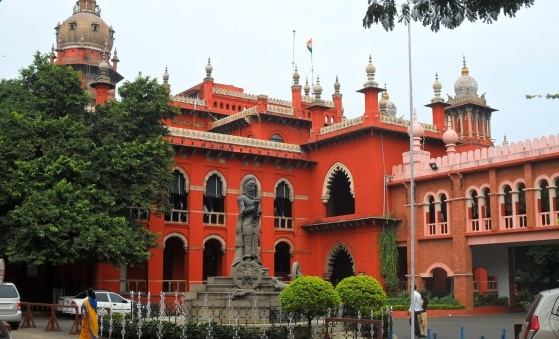
Madras High Court Calls Abrahamic Religions ‘Inherently Exclusive’ in Zen Trust Funding Ruling
-

CBCI urges Election Commission to protect every eligible voter in electoral roll revision
-

CJP says police notices served on activists ahead of October 10 Delhi protest
-

Voter-List Dispute Fuels Third Day of Protests Ahead of Supreme Court Hearing
-

Sri Lanka Announces New Measures to Strengthen Child Protection