

It is a concerted effort by major Christian aid groups that is generously and extensively aiding tens of thousands of displaced people in war-torn Sri Lanka.
Two months after the successful war against LTTE in northern Sri Lanka, Christian aid groups continue to vigorously work to meet the urgent humanitarian needs of internally displaced people from one of Asia's longest modern wars.
Action by Churches Together International (ACT) says its appeal for US $2.7 million is currently 64% covered and includes projects of National Christian Council of Sri Lanka, Christian Aid, Norwegian Church Aid and Lutheran World Relief.
The global alliance of churches and related agencies says its funding has met - food security and nutrition, water and sanitation, shelter repair, health, education, livelihood training and advocacy concerns.
According to ACT, protection remains the primary concern with nearly all IDPs confined within the camps, restricting their ability to access employment, attend regular schools, visit family and friends, and ultimately choose their place of residence.
Christian Aid and its partners, meanwhile, have been supporting IDPs in the College of Education within the Manik Farm zones in Vavuniya. On-going assistance includes provision of complementary food to 9,160 individuals, medicine to 1,221 chronic patients and non-food items to 14,236 individuals.
According to the biggest international development agency, there are still about 261,227 refugees who are facing lack of food, water and medical aid at several camps, including Vavuniya, Jaffna and Trincomalee .
Norwegian Church Aid reports that it along with its partner, Sarvodaya, has been working in Zones 1 and 2 in the Manik Farm for approximately 10,000 people. It is also playing a crucial role by attempting to influence government thinking and policies related to the humanitarian situation.
And Lutheran World Relief, an international nonprofit organization, says it has provided three meals a day to approximately 29,000 IDPs through community kitchens in Zones 2 and 4.
It also delivers 9,000 liters of water each day to 8 community kitchens to use for cooking- a total of 72,000 liters a day in Manik Camp. Additionally, LWR funds will also support the distribution of 3,000 hygiene kits and 4,000 non-food item kits to children aged 0-14 this month.
Furthermore, the Methodist Church with the National Christian Council of Sri Lanka has been currently supporting 1,500 children under five with health and nutrition as well as supplementary nutrition for lactating mothers, clothing and support for preschool education in temporary shelters.
In addition, 500 older children have been supported with notebooks and other school material. 50 wheel-chairs have been given to disabled persons.
Meanwhile, there has been growing concern over unsafe drinking water and inadequate sanitation facilities that has given rise to water-borne diseases such as typhoid, cholera and dysentery and mosquito-borne diseases such as malaria and dengue.
A report by The Times, last week, said about 1,400 people die every week due to water-borne diseases, particularly diarrhoea.
At the vast Manik Farm camp set up to detain Tamil refugees as a sequel to the war against the LTTE, about 1400 people are dying due to water-borne diseases adding to concerns that the government has failed to halt a humanitarian catastrophe, The Times said.
Amid all this the Rajapaksa's government has promised to re-settle nearly 80 percent of the displaced before the end of the year.
Most Popular
-
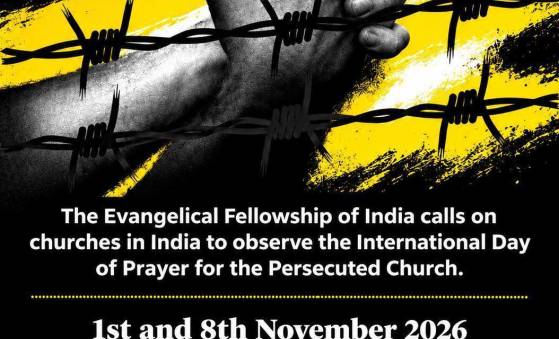
Evangelical Fellowship of India Calls Churches to Pray for Persecuted Christians on 1 and 8 November
-
A Hilltop Church in Kumaon Turns 94
-

Catholic priest and school principal seriously injured in attack by masked men in Jharkhand
-
Fresh Violence in Manipur Leaves Four Dead as Security Is Tightened
-

Myanmar Military Accused of Destroying Two Churches in Christian Regions