

Unity is strength. We have enough essays and explanations on this. Those who do not realize and reorganize their positions according to this adage are often the victims of their ignorance. This time, the challenge is to Christians in India.
Though the percentage of Christian’s population in India is negligible, the strength of the number is awesome. Officially, it is put around 25 millions according to the latest statistics available; but with many House Churches existing today, many Christians believe the population to hover over 80 millions. A united voice of 25 millions people cannot be simply ignored.
At a time when persecutions, forcible conversions and attacks on Christians have intensified, Christians’ Unity is the best way to counter any other negative forces.
However, denominational divisions, difficulty in marching under one leadership, Church practices and many other factors have paralyzed Unity among Christians in India. As many as Christian denominations in the world are all present in India. If unity among all the denominations is achieved, we will have united face in any situation. Churches in India, in one time or the other have tried to bring all the denominations under one umbrella and have even formed few bodies. But the successes of such moves are yet to translate into actions and visible results.
The latest development in this direction is seen last week, when the three Churches namely – CNI, CSI and Mar Thoma Church came under one umbrella, named 'The Communion of Churches in India' (CCI), which will be their face towards social and economic front in this country. The CCI represents 5.5 million Christians in India. All the three Churches are the constituent members of National Council of Churches in India (NCCI). The roles to be played by the CCI and the NCCI also shouldn't overlap so as to give separate views of Christians towards the government. However, the positive step taken by CCI is that, when they addressed the Indian press last Friday, they said that they are ready to welcome other Churches to join them for the same cause.
Then, we have United Christian Forum where CBCI, NCCI and EFI come together at one platform covering all the Christian community in India. But the role of the United Christian Forum needs to be strengthen and overlooked with assigning specific commissions and department so that it can truly represents the interest of Christians in India.
And there is All India Christian Council (AICC), one of the Christian bodies readily available for helping hands when any Christians are given unequal treatment in any forms. But it lacks co–operation from all quarters. There are many more Christian bodies with similar purposes. Such groupings are good for the sake of the particular denominations and Churches. What we need is a united body, which will represent the community in social, economic and various things before Indian government.
When the negligible Christian population in the country has different voices according to their respective denominations, it not only confuses others but also encourages them to exploit them on this Achilles’ heel.
Christian intellectuals had expressed their outrages over the way the Tehelka weekly newspaper had come down heavily on the activities of Evangelical Churches; whereas cleverly, it did not raise any questions on Catholic Churches, when it gave an unwarranted and exclusive report on Christians' evangelism work in India. Rather it tried to create a sort of division among the Churches, they alleged. The weekly newspaper reported that Catholic Church leaders were upset at the way Evangelical Leaders are wooing their flocks.
Considering all these situations, Christians in India irrespective of our differences and affiliations in denominations must unite together to form one United Voice of Christian.
Why it should be so difficult when Jesus Christ is the Head of the body and all the Churches are the different parts of His body? For when one part of the body pains, do not others feel the same?
Peter B. Chatlai
Most Popular
-
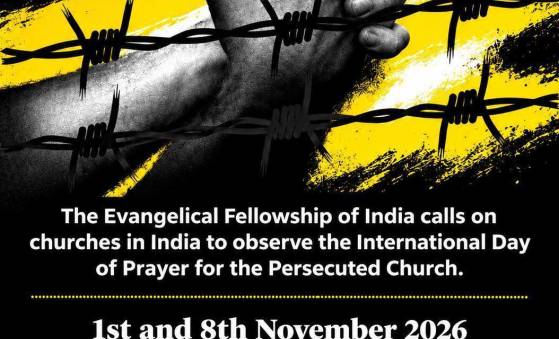
Evangelical Fellowship of India Calls Churches to Pray for Persecuted Christians on 1 and 8 November
-

A Hilltop Church in Kumaon Turns 94
-

Catholic priest and school principal seriously injured in attack by masked men in Jharkhand
-

Fresh Violence in Manipur Leaves Four Dead as Security Is Tightened
-

Myanmar Military Accused of Destroying Two Churches in Christian Regions