

The Church and the state authority in Kerala are at loggerheads over a controversial legislation, which, reportedly, impinge on the constitutionally guaranteed right of the minority communities to run educational institutions.
While the Church is determined to launch a sensitization campaign and have decided to approach the President, the Prime Minister as well as Minorities Commission on the issue, Kerala Chief Minister V.S. Achuthanandan has already met Arjun Singh, Union Minister for Human Reosurces Development, to urge that the Professional Colleges Act be incorporated in the Ninth Schedule of the Constitution to make it non–justiciable.
The state's ruling Left–Democratic Front coalition on June 30 passed a law ostensibly aimed at streamlining management of professional colleges. However, members of minority religions, including Christians, say the law infringes their constitutional right to establish and manage educational institutions.
At a recent meeting in Kochi, attended by 25 bishops of the Latin Catholic and Syro–Malabar and Syro–Malankara Churches, church leaders have decided that a judicial remedy would be sought, if needed.
"If necessary, we will approach the courts on this issue," Deputy Secretary of the Kerala Catholic Bishops Council (KCBC), Fr. Zacharia Paranilam, said.
Among those, who attended the meeting were Major Archbishop of the Syro–Malabar Church Cardinal Varkey Vithayathil, Archbishop Daniel Acharuparambil of the Verapoly Archdiocese and Archbishop Joseph Powathil, chairman of the education commission of the KCBC.
The KCBC feels that the new law violated the fundamental rights of religious minorities guaranteed by Section 30(1) of the Indian Constitution which gives religious and linguistic minority groups the right to establish and administer educational institutions of their choice.
The church leaders claim that the new law is an effort to take over their institutions and have decided to set up parish–level committees to defend their educational institutions and minority rights.
The KCBC represents the Syro–Malabar, Latin and the Malankara Catholic denomination communities which together account for more than 50 percent of the Christian community in the state. Christians account for 22 percent of Kerala's 32 million population.
The Pastoral Council attached to the Thiruvalla Archdiocese of the Malankara Catholic Church has also strongly condemned the Professional Colleges Act.
A resolution passed at the Council meeting held in Thiruvalla on 22 July has alleged that the Act was 'anti–minority and in blatant violation of the Constitutional provisions.' The resolution has also called upon the Government to withdraw the Act without any further delay.
Taking a dig at the Kerala Church's opposition to the new law, Chief Minister Achuthanandan said that the "religious leaders" should think more of the common man instead of making money by running educational institutions.
"The religious leaders do not look at the interest of the common man (the laity). They are more interested in running and supporting those who run educational institutions that make money," said Achuthanandan.
"We have the highest regards for them but they keep changing their stand. One private medical college (The CSI Memorial Hospital of Karakaonam, Thiruvananthapuram) told us that they would cooperate with us but they changed their stand when they were selected as a minority institution," said Achuthanandan.
Cardinal Vithayathil, taking a strong exception to the remark of the Chief Minister, in response, said, "The Chief Minister's statement was most unfortunate. He has questioned a fundamental right of ours and it was not proper on his part to make such statements."
Meanwhile the Church leaders have welcomed a decision by the state High Court not to change existing rules governing admissions to professional colleges.
"We welcome the court order (but) it's neither a victory nor a defeat for any party," Father Paul Thelakat, spokesperson of the Syro–Malabar Church, which is based in Kerala, said.
The court's "interim order" on July 18 was issued in response to a petition presented on behalf of an association of managers of self–financed professional colleges, including Catholic institutions.
According to the court order, notwithstanding the new law, last year's norms and procedures may still be used to process admissions to those colleges.
The court noted that the new law became effective July 2, but the colleges' management began the admission process on January 5. The petitioners have claimed their colleges already admitted students before the new legislation came into force.
The order allows the managers to decide how to fill half of the available seats in their institutions, while the rest are to be filled according to a state merit list. The new law cuts management–decided seats to 15 percent.
"We are much relieved," Fr. Raphael Thattil, vicar general of the Syro–Malabar Church's Trichur archdiocese, said, reacting to the news of the court order. The court "has given us breathing space," the priest said. His archdiocese manages a self–financing medical school.
Archbishop Powathil took a more cautious approach, noting that the court's order only deals with admission procedures, but does not discuss the merits of the bill or minority issues. "We hope the court will give us a favorable order," he added.
Christians account for 19 percent of Kerala's 31.8 million people and Muslims 22 percent, but minorities, particularly Christians, own and manage most professional colleges in the state.
Another verdict, which was issued by the state High Court on July 29, has upheld the previous order, allowing Christians who manage professional schools, to fill 50 percent of the seats on their own, as they had done before.
The verdict came in response to petitions filed by the state government, which challenged the previous order of July 18.
Both "interim" orders are valid just for 2006, until a final judgment is issued. The court heard the case details in September. Media say a final judgment may come by May–June 2007 when admissions normally are processed.
M.A. Baby, Kerala's Education Minister, has announced that the government will "file an appeal in the Supreme Court."
"The court did not stay the new legislation," the minister said, who initiated the new legislation. "It shows that the bill passed by the legislature is valid and competent."
According to the minister, the government enacted the law to check corrupt admissions practices in professional colleges and to ensure social justice.
Most Popular
-
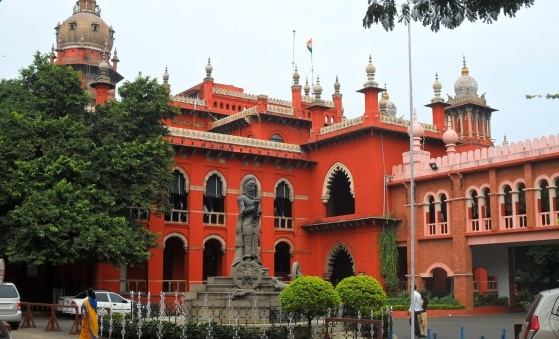
Madras High Court Calls Abrahamic Religions ‘Inherently Exclusive’ in Zen Trust Funding Ruling
-

Pastor Killed at Home in Punjab’s Batala; Police Name Local Man as Accused
-

CBCI urges Election Commission to protect every eligible voter in electoral roll revision
-

CJP says police notices served on activists ahead of October 10 Delhi protest
-

Pastor Killed on Way to Church as Violence Leaves 27 Dead in Plateau State