

New Delhi – In the wake of rise in sex–selective abortion, the Indian Government has requested the Christians and other faith groups to work together in controlling the disparity in the gender ratio and to improve the country’s health system.
This request was made by Union Health and Family Minister, Mr. Anbumani Ramadoss during a speech on selective abortions, which are banned under Indian law, and birth control.
According to Mr Ramadoss, pre–natal sex determination is a social problem and religious leaders can influence and “change the mindset of the people.”
According to a government survey, the number of females per 1,000 males is highest in Christian communities (964/1000); followed by Muslims (950/1000) and Buddhists (942/1000). Sikhs come last (786/1000) while the religion of the majority, Hinduism, comes somewhere in the middle (925/1000).
Drawing inspiration from states like Gujarat and Punjab where religious leaders have campaigned for girl child and have received positive response, Mr. Ramadoss expressed his desire to apply the same at the national level.
Sex determination before birth is banned under the Prenatal Diagnostics Techniques Act of January 1996, but simple legal prohibition is not enough: the ratio of females to males has dropped from 945/1000 in 1991 to 927/1000 in 2001.
According to demographer and social campaigner, Dr Malini Karkal, babies are subject to discrimination even after birth, with violations ranging from malnutrition to a lack of medical care and the near–impossibility of receiving an education.
Fr. Alex Vadakumthala, secretary of the Health Commission of the Bishops’ Conference has expressed his optimism about the positive role the Church can play in bridging this disparity. “We have nearly 600 Sisters who are doctors and in India this is unique. The Sisters work in 95 per cent of villages which otherwise would not have any provision of medical services because it is not cost–effective to open clinics or dispensaries and so not even private enterprises set up in these places. Nearly all doctors go to the cities,” he said.
“The Indian government has launched a programme called Rural Health Mission in which they ask for the collaboration of the Church to improve health services in villages,” he continued. “We have said very clearly that we intend to collaborate with the government and non–governmental organizations.”
Most Popular
-
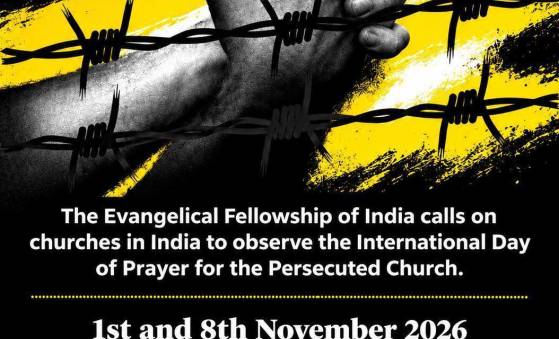
Evangelical Fellowship of India Calls Churches to Pray for Persecuted Christians on 1 and 8 November
-

A Hilltop Church in Kumaon Turns 94
-

Catholic priest and school principal seriously injured in attack by masked men in Jharkhand
-

Fresh Violence in Manipur Leaves Four Dead as Security Is Tightened
-

Myanmar Military Accused of Destroying Two Churches in Christian Regions