

The apex body of Evangelicals in India has expressed regret at the Central Government's delay in heeding to repeated entreaties for an early enactment of laws against communal and targetted violence; withdrawal of the Freedom of Religion legislation; and acceding to the long-pending demand of Dalit Christians for their Constitutional rights.
The Evangelical Fellowship of India on Monday urged the government to pass the Bill on Prevention of Communal and Targetted Violence, that includes provisions for compensation, rehabilitation and reparation.
"We note that such a Bill was drafted by the National Advisory Council in 2011 and given to the government. This Bill should be taken out of cold storage, refined in consonance with principles of federalism, and enacted as law to effectively bring an end to communal strife which has ravaged this country in the last six decades," said Rev Richard Howell, General Secretary of EFI.
He also urged the government to take necessary legislative and legal steps to recall the Freedom of Religion Acts promulgated in several states. "These Acts are being used to harass and intimidate religious minorities, and in particular the Christian Community and their pastors, house churches and community gatherings," informed Rev Howell.
On the issue of granting SC status to Dalit Christians, he said not giving Dalit Christians their SC privileges amounted to discrimination on grounds of religion and denial of freedom of religion.
"Ending such discrimination and taking steps to pre-empt communal violence will go a long way in burnishing India's image internationally as a secular democracy which is a haven for religious minorities, dreamt of by Nobel laureate Rabindra Nath Tagore, Mahatma Gandhi, Jawaharlal Nehru and Baba Saheb Ambedkar," said Howell.
The Evangelical Fellowship of India, meanwhile, welcomed the Central Government's commitment to human rights and specially the rights of religious and other minorities, reiterated in the Universal Periodic Review under the auspices of the United Nations Human Rights Council at its sessions from March to September 2012 at Geneva.
On September 20, 2012, the United Nations Human Rights Council in Geneva adopted the outcome of the Universal Periodic Review on India. There were some 169 recommendations made at its second review on May 24 this year.
The wide-ranging recommendations called upon India to ratify multinational treaties against torture and enforced disappearances, repeal AFSPA, impose a moratorium on the death penalty, introduce an anti-discrimination law, and protect the rights of women, children, Dalits, tribal groups, religious minorities, and other groups at risk.
However, India's failure to accept key recommendations of the Universal Periodic Review has come in for sharp criticism from rights groups.
Reports said during the September 20 session of the Human Rights Council, several leading international human rights organisations expressed serious concerns regarding India's decision not to adopt the many recommendations relating to ending the systematic impunity enjoyed by Indian security forces, and not to accept recommendations to deal effectively with communal and targeted violence.
Bei Chatlai Beita has contributed to this article.
Most Popular
-
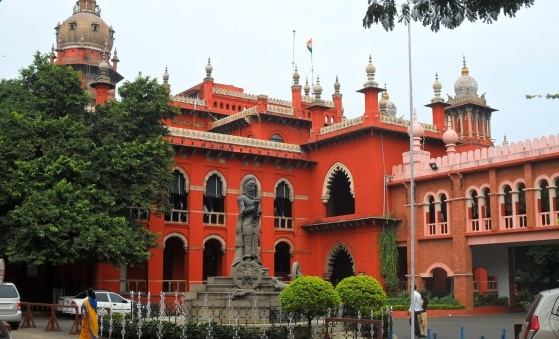
Madras High Court Calls Abrahamic Religions ‘Inherently Exclusive’ in Zen Trust Funding Ruling
-

CBCI urges Election Commission to protect every eligible voter in electoral roll revision
-

CJP says police notices served on activists ahead of October 10 Delhi protest
-

Pastor Killed at Home in Punjab’s Batala; Police Name Local Man as Accused
-

Voter-List Dispute Fuels Third Day of Protests Ahead of Supreme Court Hearing