

Eucharist and not "superficial, anemic observance" should be central to believers' faith, Auxiliary Bishop Bosco Penha of Bombay has urged.
Speaking to an Asian assembly of Catholic Church workers in Kerala, the bishop explained that the Church could be meaningful only if the Eucharist is rescued from being a "mere superficial, anemic observance removed from the reality of life ... in which bread is broken and the cup shared."
In his address to the Asian Integral Pastoral Approach (AsIPA) General Assembly that concluded recently in Kerala, Bishop Penha said that Eucharist is the "theological foundation" of Small Christian Communities. However, "all the seven Sacraments are in danger of ritualism, and the Eucharist is in the greatest danger," he warned.
Expressing surprise that Eucharist–celebrating communities have failed to see the "great divide" existing in society and even in their midst, the bishop said that only when Catholics "care for all – the poor, sick, lonely, orphans, widows, destitute, physically handicapped and mentally challenged – will the Eucharist be meaningful."
"Today parishes are packed with worshippers around the Eucharistic table. They pray, sing hymns in unison. They listen to the celebrant as he challenges them with the Gospel. They partake of the Eucharistic bread and 'go in peace to love and serve the Lord...Later the poor scamper to the squalor and the inconvenience of their huts, and the rich to the comforts of their bungalows. The gap dividing the praying parish community is as wide as day and night," the prelate lamented.
According to him, the "so–called good Christians, who never miss the Sunday Mass" have "stripped it bare to the quality of an event." They place it inside an imposing cathedral, surrounding it with middle–class respectability such as carpets, silk, gold and silver, but keep it away from "the sweat, tears, pain, hunger, thirst and death of the Man of Galilee."
According to Bishop Penha, middle–class Christians have missed the significance of the sacrifice of Jesus in their life.
"While celebrating Mass, hardly anyone ever realizes that broken bread and poured wine is given to express solidarity, especially with the poor and oppressed, and to build a more fraternal and just society," he said.
"We have summoned the Eucharist to lend respectability to social occasions," he noted, citing anniversaries, birthdays, jubilees and weddings. But "the overindulgence in food and drink is hardly becoming of the Sacrament of unity and sharing we just celebrated," he added, describing a hollowness of faith.
Such an "ideal situation" will become a reality when more Small Christian Communities are created in our parishes, he continued, pointing out that such communities call for a change in functioning of all sectors in the Church.
Bishop Penha suggested moving from small Christian communities to small human communities to national integration. Then the Eucharist would truly become the theological foundation of Small Christian Communities and social change, he said.
"Ritualism [has] killed the spirit of the Sacraments over the years," added Jesuit Archbishop Stanislaus Fernandes of Gandhinagar, secretary general of the Catholic Bishops' Conference of India (CBCI). "[We need] to reorient with new vision and mission to serve the poor and needy."
Most Popular
-
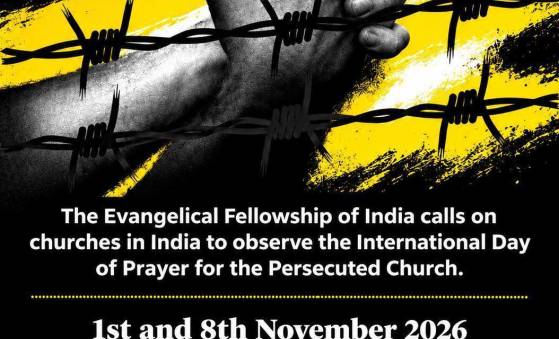
Evangelical Fellowship of India Calls Churches to Pray for Persecuted Christians on 1 and 8 November
-

A Hilltop Church in Kumaon Turns 94
-

Catholic priest and school principal seriously injured in attack by masked men in Jharkhand
-

Fresh Violence in Manipur Leaves Four Dead as Security Is Tightened
-

Myanmar Military Accused of Destroying Two Churches in Christian Regions