

Hindu nationalist Bharatiya Janata Party (BJP) and its allies are already preparing to win over the voters in Madhya Pradesh by campaigning on communal lines, which, the Christian communities living in the state fear, would create increased persecution in the state.
Although elections in Madhya Pradesh are more than 18 months away, many Christian leaders suspect that the state's ruling Hindu nationalist party would be raising communal issues ahead of the upcoming vote to woo the electorate.
According to Indira Ayengar, president of the Madhya Pradesh Christian Association and a former member of the State Minority Commission, since July 2006, more than 55 attacks against Christians have been reported in the state.
The attacks became so severe that Ayengar undertook fast unto death on April 5 to protest against the rising violence and broke her fast only after Madhya Pradesh's Director General of Police assured her that the Christian community would be protected against Hindu extremist attacks on Good Friday and Easter. "I had to take this step because the atrocities on Christians have increased manifold, and there is no end to the government's encouragement to Hindu extremist groups," Ayengar said.
"Members of the Muslim minority community, too, are having a hard time in the state," she said.
According to Ayengar, in Madhya Pradesh, Hindu extremists often slander Christians to incite violence. The BJP and Hindu extremist groups have falsely claimed that Christians convert tribal people and Hindus by force or allurement, a charge Christians have denied.
Targeting Christians have become a political plank for the Hindu radical parties to garner votebanks, Ayengar. According to her, Snehlata Kedia, a woman claiming to be a saint from Hinduism's Nirala Peeth sect, on March 31 lectured on women and the Christian concept of confession of sins at the Bharat Bhawan government building before an audience that included high government officials.
"Kedia told the audience that Christian priests ask too many strange questions to force young Hindu girls to confess their sins, which leaves a very unhealthy impact on their tender minds," Ayengar recalled. Media reports quoted Kedia as claiming that Christian priests often have sex with these girls, as once they become Christians they have low status in Christian society.
"Kedia also had CDs on what she taught, and I suspect that these CDs will now be distributed everywhere in the state," Ayengar said.
Fr. Anand Muttungal, spokesman of the Catholic Bishops' Conference of Madhya Pradesh agrees. He is certain that the surge in violence is linked to upcoming December 2008 state assembly elections.
"It seems the BJP has already started its election campaign," he said.
To foster public outrage and present itself as protector of the Hindu faith, the BJP claims Christian missionaries are "converting" Hindus with foreign money and attributes this trend to secular Congress party chief Sonia Gandhi, who was raised Roman Catholic in Italy. Demonizing Christians thus serves a vital purpose for Hindu nationalists, who need an enemy to survive, he said.
Ayengar and Fr. Muttungal both agreed that Jabalpur district of Madhya Pradesh recorded the highest incidence of anti–Christian violence. Of the 55 incidents reported since July 2006, 34 occurred in Jabalpur alone. To date in 2007 at least seven attacks have been reported in Jabalpur, Fr. Muttungal said. Ayengar said beyond Jabalpur, of Madhya Pradesh's 45 districts, those with the highest incidence of anti–Christian violence are Mandla, Dindori, Betul, Ujjain, Jhabua and Khargone. Fr. Muttungal said violence also occurs in Balaghat and Barwani.
According to Ayengar, Hindu extremist groups active in Madhya Pradesh include the Dharma Sena, Seva Bharat (Service India), Vanvasi Kalyan Ashram (Tribal People Welfare Home or VKA), Bajrang Dal and RSS. Dharma Sena, suspected to be involved in much of the attacks on Christians, is backed by the Vishwa Hindu Parishad (World Hindu Council or VHP). The Bajrang Dal is VHP’s youth wing. The Seva Bharat and VKA are registered as "social" organizations that carry out "development" projects, mainly in areas with tribal populations but are believed to spearhead hate campaigns against Christians under that guise. The RSS, established in 1925, is the parent organization of several Hindu extremist organizations, including the VHP, Seva Bharat and VKA.
Madhya Pradesh's history of religious violence dates before Indian independence in 1947. Religious persecution has occurred during the rules of both the Congress Party and BJP. In 1968 state lawmakers passed an anti–conversion law with Congress Party support, Fr. Muttungal said.
Persecution intensified, however, after the BJP came to power in December 2003, he said. Anti–Christian violence erupted in Jhabua district after a young girl was found dead January 11, 2004, in a Catholic school compound. Although a non–Christian confessed to the crime, Hindu extremists held the church responsible and continued to carry out many attacks on Christians and their institutions.
Many Christians believe that the present Madhya Pradesh State Minorities Commission is acting in connivance with the Hindu radicals.
According to a 2006 India Report on Human Rights Practices released by the U.S. State Department, at least 28 people were arrested under the state anti–conversion law between July 2005 and June 2006.
A report released by the National Commission for Minorities (NCM) in June 2006 found on similar lines that Hindu extremists had frequently invoked the state's anti–conversion law as a means to incite mobs against Christians and have Christians arrested without evidence. "The life of Christians has become miserable at the hands of miscreants in connivance with the police," the NCM noted in its report. "There are allegations that when atrocities were committed on Christians, police remained mere spectators, and in certain cases they did not even register complaints."
However, in contrast, Anwar Mohammed Khan, chairman of the State Minorities Commission, said there had been complaints about attacks against members of the Christian community, but that extremists have not "targeted" Christians.
Most Popular
-
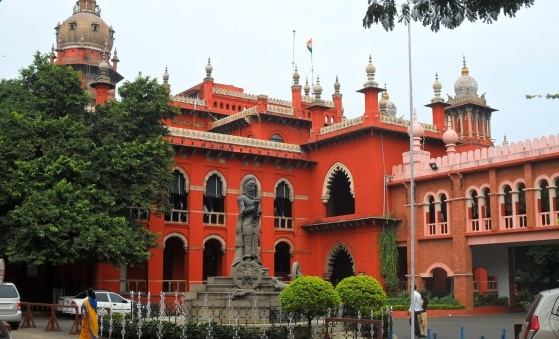
Madras High Court Calls Abrahamic Religions ‘Inherently Exclusive’ in Zen Trust Funding Ruling
-

CBCI urges Election Commission to protect every eligible voter in electoral roll revision
-

CJP says police notices served on activists ahead of October 10 Delhi protest
-

Voter-List Dispute Fuels Third Day of Protests Ahead of Supreme Court Hearing
-

Sri Lanka Announces New Measures to Strengthen Child Protection