

A premier Christian publishing house in the country Friday will be marking three hundred years of service to the Indian community.
The Indian Society for Promoting Christian Knowledge (ISPCK) will be holding its tercentenary celebration on Oct. 15 with a thanksgiving service at the Cathedral Church of the Redemption in New Delhi led by the Archbishop of Canterbury, Dr. Rowan Williams.
The commemorative service will be graced by several church heads from across India, including the Moderator of the Church of North India Rev. Purely Lyngdoh and Archbishop Vincent Consesaao of Delhi.
Also joining the celebration would be Simon Kingston, General Secretary, SPCK UK, and Dr Davis Bunn an award winning novelist from Oxford University.
The ISPCK, headed by Rev Dr Ashish Amos, has made significant contributions through its publications, music, social documentaries, library grants, college student book awards, and more recently free schools for children of migrant populations.
"Envisioning a larger societal purpose has always been the hallmark of the ISPCK," says Rev Amos.
The distinct vision of the Society, he asserts, is to mould itself into a multi-faceted organization with promoting Christian knowledge and publishing being its core activity.
"On the threshold of celebrating 300 years of mission activity, the ISPCK endeavours to engage the Indian Church with the richness of knowledge required to generate spiritual wealth and bring in hope in the lives of all people who associate with it," he said.
During the Oct. 15 service, a 260-page volume of ISPCK's history will be released by the Archbishop of Canterbury.
The Society, formerly a branch of SPCK, London was launched in India in 1710 with the coming of two German missionaries Bartholomew Ziegenbalg and Heinrich Plutschau.
Since its inception, SPCK's work in India was to provide education and literature to spur growth and bring change in the society.
The Society today produces up to one hundred new titles each year in a variety of languages. It also has played a great role in highlighting the need of women, Dalits and minority groups.
Most Popular
-
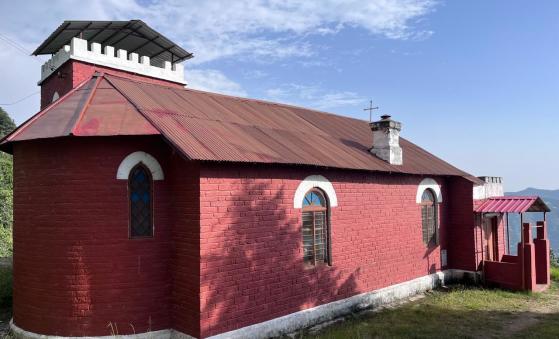
A Hilltop Church in Kumaon Turns 94
-
Evangelical Fellowship of India Calls Churches to Pray for Persecuted Christians on 1 and 8 November
-
Catholic priest and school principal seriously injured in attack by masked men in Jharkhand
-

Fresh Violence in Manipur Leaves Four Dead as Security Is Tightened
-

Jesuit Deacon’s Ordination Postponed Amid Questions Over Conversion Records