

Bangalore, Oct. 27, 2004 – Liturgy must be expressed through culture to the local reality of life if it is to strengthen people’s faith and active participation in Church, said Christian liturgy experts of the Indian Liturgical Association who assembled in recently Bangalore to mark the 40th Anniversary of the Second Vatican Council’s "Sacrosanctum Concilium," whose English title is "Constitution on the Sacred Liturgy."
About twenty specialists had gathered from the three Catholic rites in India – Latin, Syro–Malabar and Syro–Malankara – for the meet that took place from Oct. 13–16 in Bangalore. Whereas the Latin rite follows the Roman liturgy, introduced by European missionaries in the 15th century, the two Oriental rites follow Syrian Church traditions and trace their origin to Saint Thomas the Apostle.
In a post–meeting statement, the liturgists lamented that believers have become "passive listeners rather than active participants" in liturgy because it does not "sufficiently nourish" them. After analyzing the impact of liturgy under various rites, they agreed that an overemphasis on "religious obligation" and a "lack of orientation" tend to make liturgy mere “empty ritual” for many Christians.
They called for liturgy to be celebrated in a manner that allows people to understand it and articulate it from their cultural background, saying such inculturation "is a must in the process of effective proclamation."
The liturgy experts cautioned, "Where the official liturgy does not spiritually nourish people in sufficient measure, Christians tend to focus on popular devotions for obtaining miracles and favors."
Expressing dissatisfaction over the slow pace of inculturation in the Indian Church, which are still "influenced by the West rather than local culture," the liturgists cautioned that inculturation cannot be artificial or start from the outside, but must arise spontaneously from within culture and local life.
They recommend melodious chanting of prayers and Scriptures as practiced in some Oriental Churches and restoration of permanent deacons for better coordination of the laity. The forum also suggested forming lay ministers and letting them distribute Communion not only during liturgical services but in hospitals, homes for the elderly and elsewhere when a priest's services are not available.
Meanwhile, the potential for Small Christian Communities and family units as "a great platform" for liturgical renewal should be developed, with an emphasis on lay participation, the liturgists expressed. "Similarly parish liturgical teams can play a major role in making the liturgy experiential and relevant to the community."
Lay people could share the experience of the word of God during an "appropriate moment in the celebration," the experts advised, while noting that homilies are reserved to priests and deacons.
"We are convinced that the whole of liturgy should lead us to an experience of the risen Lord" that would make "proclamation a 24–hour–a–day enterprise for Christians," they declared in their statement.
According to the specialists, including present and past directors of the Indian Church's National Biblical, Catechetical and Liturgical Center, liturgical celebrations must help make a Christian "a messenger of Christ through contemplative listening and responsive action."
Liturgy should use signs and symbols of the culture, they said, commending the practice of offering gifts and fruit of people's labor.
Father Jose Palathinkal, national secretary of the Indian Liturgical Association said that the group is an independent body of liturgists. It has members from the three rites, who aim to mutually enrich each other through reflection, sharing and study of Church documents on liturgy.
The forum was started in 1991 and has played a major role in shaping the liturgical ethos in various rites, Father Palathinkal said. Its 50 members include three nuns.
Father Antony Nariculam, former president, admitted that the gatherings have helped to develop better understanding among the rites and to share the richness of their liturgical celebrations with each other.
Most Popular
-
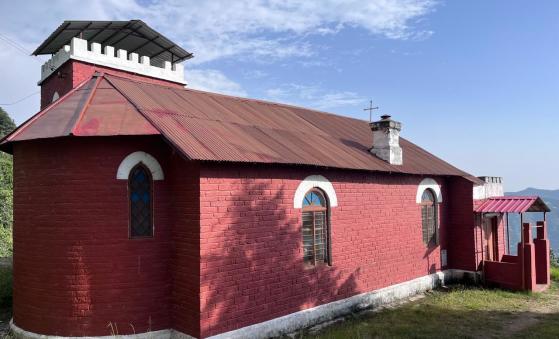
A Hilltop Church in Kumaon Turns 94
-
Evangelical Fellowship of India Calls Churches to Pray for Persecuted Christians on 1 and 8 November
-
Catholic priest and school principal seriously injured in attack by masked men in Jharkhand
-
Fresh Violence in Manipur Leaves Four Dead as Security Is Tightened
-

Jesuit Deacon’s Ordination Postponed Amid Questions Over Conversion Records