

Recently, I met some Christian leaders; 'Dalit Christians,' they called themselves.
"Are not all Christians equal?" I asked, intrigued. I always thought that caste was practiced in the society and the four walls of the Church strictly kept it out. And, that is why, people, suffering for centuries under the oppressive caste system – a social stratification rooted deep in Hinduism which organizes people by a combination of descent and employment – have taken refuge in Christianity which speaks of equality and justice.
The 'Dalit Christians' educated me. They explained that 'Dalits,' a word used to define the lowest group in the caste system, have been, for thousands of years, subjected to caste–based atrocities in the society.
For centuries they were "not allowed to speak to 'upper caste' people, not allowed to reside in the same area, not allowed to draw water from the same well, not allowed to pray in the same temple" – the list of prohibitions goes on. I stared at them. "Are they diseased?" I wondered since the society appeared to have put them under strict "quarantine." It reminded me of how the lepers were treated in the days of Jesus. Like leper colonies in the days of Jesus, 'Dalit' colonies exist in India, I heard.
To break out from the shackles of the oppressive caste system, many 'Dalits' embraced Christianity. Hoping a better life, a life that they can lead with basic human dignities. But, I was shocked to hear that caste–based discrimination was also carried on within the walls of the church.
Why, I asked. One Catholic leader, who has devoted his life fighting for the rights of 'Dalit Christians' succinctly explained, "Indian psyche is caste based. It is in blood of Indians. Wherever Indian goes, whatever religion he follows, he carries it with him."
Hence, the plight of the 'Dalits' who have embraced Christianity continues as the "upper–caste" Christians continue to practice within the walls of the church, what their Hindu counterparts do outside the four walls – discriminate, segregate, shun.
In Indian churches, casteism is prevailing theoretically and practically, I realized. It is more pronounced in southern states like Kerala. In many churches, people are made to seat separately based on caste, separate cemeteries are maintained, separate communion services are held, there is no interaction between 'upper–caste' and 'lower–caste' Christians, no inter–caste marriages...the list goes on and on. This is how these people are being humiliated and suppressed.
Surprisingly though, these 'Dalit Christians' constitute over 70 percent of the total Christian population in India. Nonetheless, they have no voice as spiritual as well as temporal (read: administrative) authority and power are wielded by the powerful coterie of 'upper–caste' Christians.
Shockingly, though these 'Dalit Christians' are entitled to 'minority' benefits, yet, they are denied any access to them, resulting in a deep chasm between them and others. Indeed, among all the communities, 'Dalit Christians' are socio–economically the most backward community.
Hearing the plight of the 'Dalit Christians' made me bow my head in shame. Is this what Jesus taught, I wondered. Is this what Jesus lived and died for? Jesus died so that the divide between people could be bridged...and we making the divide again?
We are living in the 21st century. Over 50 years have passed since we have liberated ourselves from our foreign colonial oppressors. But oppression of a different kind still persists, I realized. Politically free, these people continue to live under social bondage, stigmatized and shunned.
When I think about the atrocities perpetrated by the 'upper–caste' Christians on the 'Dalit Christians,' the voice of Apostle Paul rings in my ears loud and clear, "God's name is blasphemed among the Gentiles because of you" (Romans 2:24).
Though we profess that we are Christians, yet we shun the 'Dalits' just as the Pharisees shunned the tax collectors (Luke 18:9–14). Are we like the 'wicked servant,' forgetting that we too were sinners before God forgave our sins and embraced us (Matthew 18:21–35)? Do we want to receive the same judgment of God which the rich man received who did not share the blessings God has given to him with Lazarus (Luke 16:19–31)?
A person who holds onto his caste identity even after accepting Christianity is putting his feet in two different boats. He will drown. Hindus practice casteism. Christians do not. You can be a Hindu or a Christian. Not both. Why, indeed, should we profess our caste when we call ourselves Christians? Is the love and grace of God not sufficient?
Let us re–educate ourselves. Let us not sin anymore as Christians. When we shame the 'Dalit Christians,' we shame ourselves, we shame Christianity, we shame Jesus. God is kind, patient, gentle and loving. But His judgment is terrible. The same way we judge these 'Dalit Christians,' He will judge us.
I was a Hindu Brahmin, an 'upper–caste,' before Christ took hold of me. I have the same confession of Apostle Paul: "Christ Jesus came into the world to save sinners – of whom I am the worst. But for that very reason I was shown mercy so that in me, the worst of sinners, Christ Jesus might display his unlimited patience as an example for those who would believe on him and receive eternal life" (1 Timothy 1:15–16). If Jesus could love and embrace the sinners and the lepers, on what grounds do we shun these 'Dalits' – who are not diseased, whose only sin, perhaps, may be that they were born as a 'Dalit'?
Let us change the "Indian psyche." We can change. We will change. It is not too late.
Most Popular
-
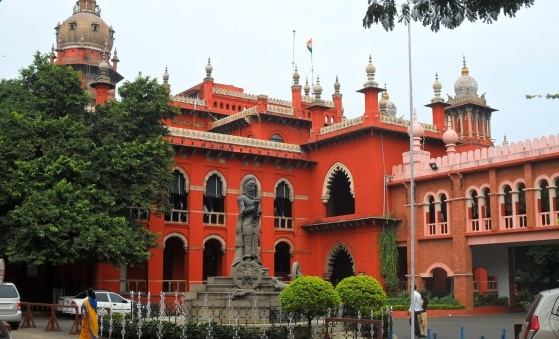
Madras High Court Calls Abrahamic Religions ‘Inherently Exclusive’ in Zen Trust Funding Ruling
-

CBCI urges Election Commission to protect every eligible voter in electoral roll revision
-

CJP says police notices served on activists ahead of October 10 Delhi protest
-

Voter-List Dispute Fuels Third Day of Protests Ahead of Supreme Court Hearing
-

Sri Lanka Announces New Measures to Strengthen Child Protection