

Romans 8:18-27 talks about a "groaning" – a deep painful longing for the return of Christ. This type of mourning seems to be at odds with the type of Christianity we speak about. We may not agree with the prosperity Gospel that is preached, yet in our desire to see transformation we seem to imply that if we just work harder, prayer more, study the Bible more, be more professional in our good works ministry, win more people to Christ – then through this effort of ours we will have lasting transformation.
In our desire to apply an integral mission approach to our relief, development and justice ministries we quickly buy into an ideology that we can solve the ailments of our broken world. There is something attractive and appealing about knowing what to do to make things better. Aid practitioners like to be able to quantify a problem and find a solution.
I remember when I first started nursing. We would come on duty early in the morning and find the ward is a mess. We would team up and systematically work through the ward, getting each bed made, each patient washed and fed, each area cleaned. At the end of the ward round we would look back and for a fleeting moment we would see a transformation. Then someone would vomit, something would spill and patients would move around and everything would change. It took me a while to realise that though it was nice to see neat and orderliness in a ward, real transformation was not the outward appearance but it was in the "living and working" ward that we would find it. It was holding the hand of a patient who was afraid and in pain. It was being the shoulder to cry on for worried relatives, it was responding to people needs for help. It was working as a team to care for people. It was the joy of seeing a patient recover and go home. It was standing together to cry for the patient who died.
As I look back over this time and all the relief, development and justice work we engage in I believe we need to recognise that real transformation is not the temporary provision of food, water and shelter (as important as these are), real transformation can be captured in:
- Participation: working through the pains and struggles together, serving one another
- Community: being a part of each other's lives, standing together, trusting, building and serving together
- Love: learning to selflessly love one another and our world will greatly alter how we live, the choices we make and the priorities we focus on.
- Walking with God: the more we grow in our walk with God the more we will groan and feel the pain.
The truth is that the more we love, the more we engage in community and participate in life the more we will see and know the pain and brokenness of life – the more we will groan. But it is a groaning that intercedes and engages in loving and sharing our lives.
Like the ward, transformation is an on-going process – it is a daily choice to love. And as we choose life so we grow in Christ and begin to taste enough of God now to whet our appetite for the banquet. Relief, development and transformation activities without love will leave emptiness.
Sheryl Haw is the International Director of Micah Challenge
Most Popular
-
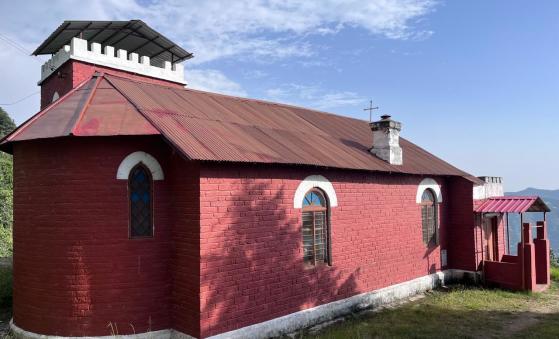
A Hilltop Church in Kumaon Turns 94
-

Evangelical Fellowship of India Calls Churches to Pray for Persecuted Christians on 1 and 8 November
-

Catholic priest and school principal seriously injured in attack by masked men in Jharkhand
-

Fresh Violence in Manipur Leaves Four Dead as Security Is Tightened
-

Jesuit Deacon’s Ordination Postponed Amid Questions Over Conversion Records