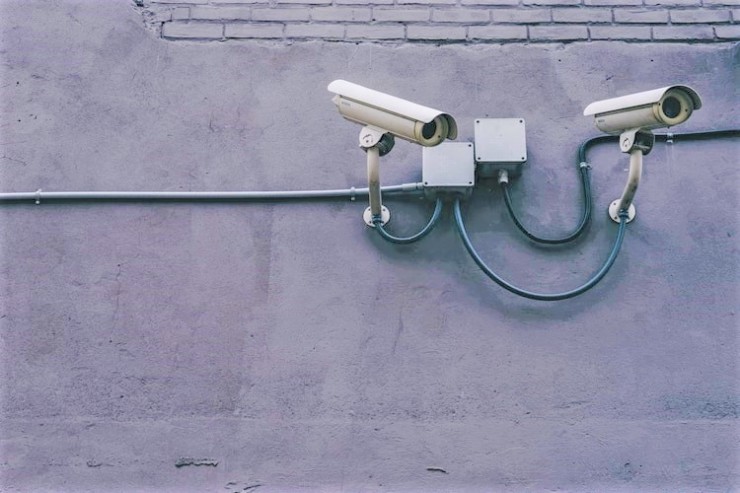
In a move to safeguard human rights, the Supreme Court of India on December 2 ordered the federal and state governments to install cameras and recording devices in all the offices of investigating agencies that have the power to detain people.
Police across the nation must strictly comply with the court’s order and record all arrests and interrogations of criminal suspects digitally to ensure that the rights of detained citizens are not violated.
Furthermore, the court said people have the right to request video footage from the investigative agency of suspected violations and can move the court against any infringements.
It has asked both the federal and state governments to file an action plan within six weeks with a timeline to comply with the order.
Father Sahaya Philomin Raj, a Jesuit lawyer practicing in the Tamil Nadu High Court, told UCA News, "The court allowing victims of violations to obtain the footage and move to the appropriate forum for redress is really empowering citizens."
"It is an order that can check human rights violations,” he said.
Earlier, the 1996 court order that had a collection of 11-point guidelines to ensure rights are not violated during an arrest was implemented by investigative agencies.
The guidelines emphasized that the family must be informed of the arrest, and the accused must have access to attorneys and relatives or friends.
"The current order is a further extension of it to ensure that an accused also has rights, and they should be protected constitutionally," Father Raj added.
The Assam Christian Forum spokesman, Allen Brooks, welcomed the court’s order to ensure the fundamental rights of all people, but is concerned “how far the agencies will translate in intention to reality.”
Speaking to UCA news, Brooks pointed out that violations occur and vanish without evidence from police stations where CCTV cameras are already installed.
In June, a Christian father and son in Sathankulam, Thoothukudi were tortured in a police station. Brooks said there were CCTV cameras in the police station to which the two were taken and tortured. “But no footage of their torture was captured on camera. Under such a situation, what should one do?” he asked.
"Most often, when such violations take place, the CCTV camera works but has no electrical power … for some reason the camera would not work," Brooks told UCA News.
According to National Campaign Against Torture, there were 1,731 custodial deaths in 2019. Accounting for almost five daily custodial deaths. Of these, 1,606 fatalities occurred in court custody and 125 in police custody.
Of those who died in police custody, 60 percent belonged to economically deprived Dalit and tribal groups and were picked up mainly for minor crimes, the report said.