

The office of the United Nations High Commissioner of Refugees(UNHCR) is mandated to protect and assist refugees. Refugees are persons who have been forced to flee their countries because of a well founded fear of persecution for reason of race, religion, nationality, membership of a particular social group or political opinion due to which they are unable or unwilling to avail the protection of their own country. In some regions, refugees include persons forced to flee across international borders due to civil conflict, generalized violence and systematic violation of human rights in their countries of origin.
Worldwide, there are approximately 20 million people of concern (refugees and returnees) to UNHCR. Nearly 80% of these are women and children. In India, there are some 200,000 refugees. While the Government of India directly takes care of the vast majority, approximately 12,000 persons are under UNHCR’s mandate. This includes some 11,000 Afghans and nearly 1000 Myanmarese living largely in Delhi and its surrounding areas, including Faridabad. Access to primary health care is a basic human right and through government hospitals and the Voluntary Health Association of Delhi(VHAD), and implementing partner, UNHCR facilitates that access.
VHAD endeavours to provide quality Primary Health Care directly through two centres and a mobile–van covering areas of high refugee concentration or those lacking adequate health facilities.
Refugees have access to Government health infrastructures(19 government hospitals in Delhi)providing free medical service, with the patient having to bear cost of medicines/laboratory tests not available. Hospital assistance/counseling is available to those in need of guidance to avail proper health services.
A special counter manned by VHAD, has been provided at the AIIMS for refugee patients. A medical social–worker and interpreters are available for assistance. Medical reimbursement for care through government infrastructure is available for the serious/chronically ill and undernourished. Dentures for the old and spectacles are also covered under the programme. In the year 2003, approximately 500 cases received reimbursement of medical expenses on a monthly basis.
As per a survey commissioned by UNHCR and conducted in end 2002 to assess maternal and child health/nutrition status, there were no cases of acute malnutrition, very few cases of low birth weight babies, and about 88% of deliveries were conducted in hospitals. Only 12 % were conducted at home(as against standard of =50% live births attended by skilled personnel).
Expremely vulnerable individuals such as the handicapped and elderly are supported with appropriate assistance based on their need and access to support systems. The assistance could include one or a combination of the following – rehabilitation, provision of prosthetic aids, supplementary diet, counseling, hospital commuting expense, attendants’s fee, home visits, etc.
In addition ot the services being provided, the refugees are encouraged to organize Health committees to flag out issues of concern and find solutions with the support of the VHAD/UNHCR. A calendar of events for the year has been drawn out by VHAD in consultation with the committees. This includes dental/eye/health check ups, special camps for children, women and elderly, as well as worshop on HIV–AIDS, substance abuse etc.
Source: UN newsletter
Most Popular
-
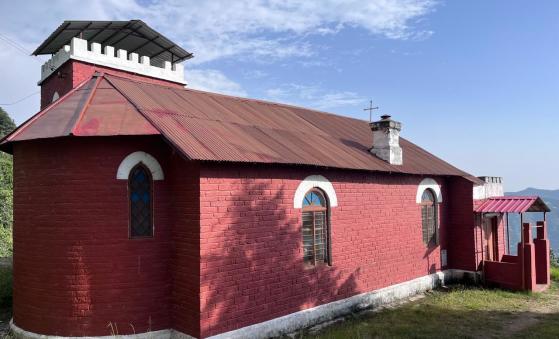
A Hilltop Church in Kumaon Turns 94
-
Evangelical Fellowship of India Calls Churches to Pray for Persecuted Christians on 1 and 8 November
-
Catholic priest and school principal seriously injured in attack by masked men in Jharkhand
-
Fresh Violence in Manipur Leaves Four Dead as Security Is Tightened
-

Jesuit Deacon’s Ordination Postponed Amid Questions Over Conversion Records